
Overcoming the Challenges of Off-Grid Water Pumping with an MPPT Solar Pump Inverter
For EPC contractors, distributors, and importers operating in regions with unstable grid infrastructure, delivering reliable water supply solutions is a persistent challenge. Traditional diesel generators are increasingly unviable due to soaring fuel costs, high maintenance requirements, and strict environmental regulations. On the other hand, direct-coupled solar pumping systems often fail to deliver consistent water flow, as they are entirely dependent on peak sunlight hours and suffer from severe efficiency drops during cloudy conditions or early morning hours. This inconsistency leads to frustrated end-users and costly service callbacks for installation teams.
To bridge the gap between solar energy generation and consistent motor performance, the industry has turned to the MPPT solar pump inverter. By intelligently managing the power extracted from photovoltaic arrays, a high-quality solar water pump drive ensures that motors run smoothly from sunrise to sunset, regardless of fluctuating irradiance. For B2B buyers sourcing equipment for large-scale projects, understanding the technical nuances of a PV pump inverter is critical to selecting the right hardware. This comprehensive guide will break down how Maximum Power Point Tracking (MPPT) technology revolutionizes solar irrigation and off-grid water supply, helping you make informed procurement decisions for your distribution channels and project portfolios.
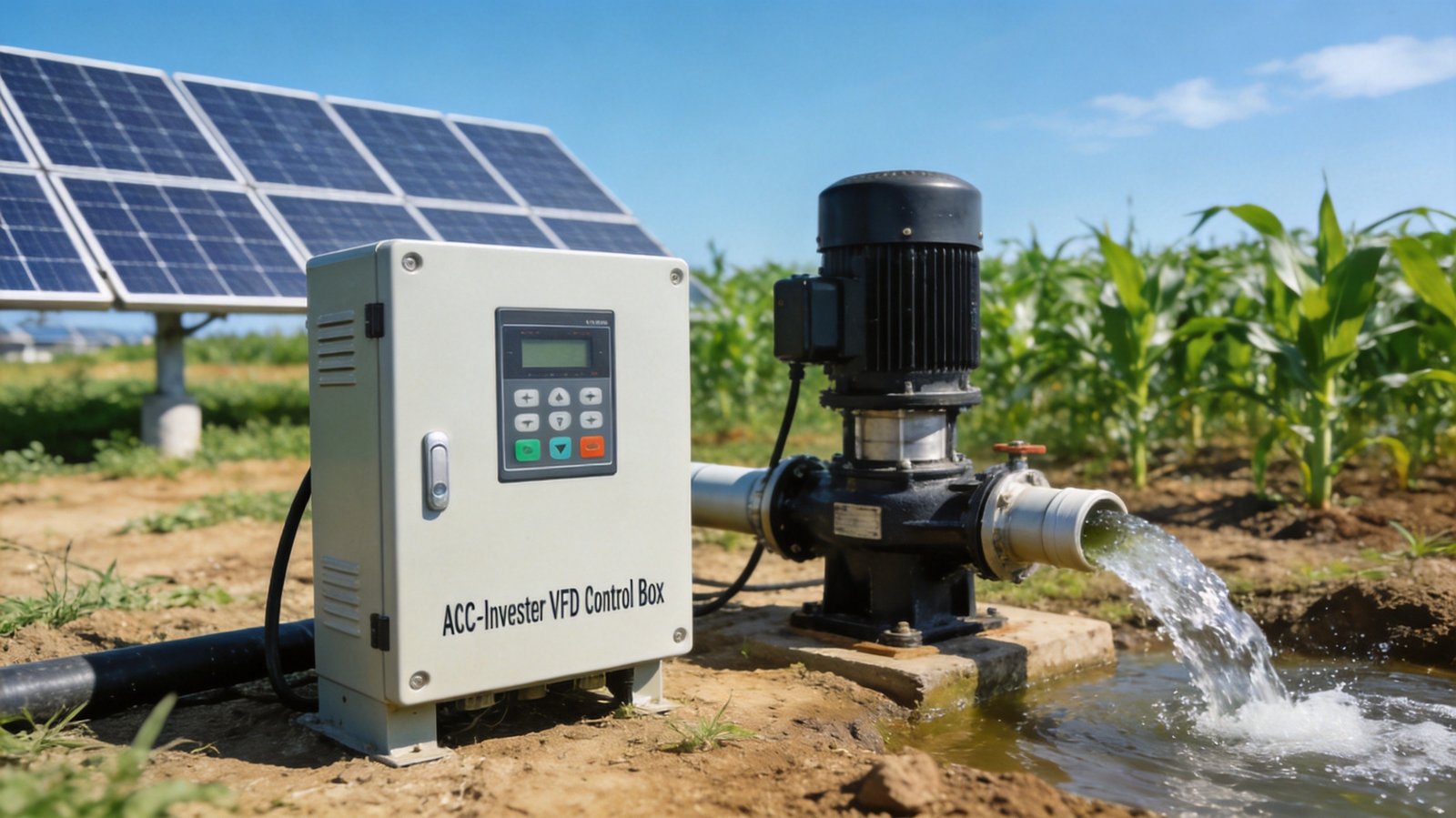
How MPPT Technology Optimizes Your Solar Irrigation System
At the core of modern solar pumping technology is the Maximum Power Point Tracking (MPPT) algorithm. Solar panels have a non-linear current-voltage (I-V) curve, meaning their power output changes dynamically with temperature and solar irradiance. An MPPT solar pump inverter continuously scans this curve to find the exact operating voltage where the product of current and voltage is maximized. Unlike fixed-frequency solar drives that force the panels to operate at a static voltage—often resulting in significant energy waste—the MPPT controller dynamically adjusts the electrical operating point of the modules. This ensures that every available watt of solar energy is converted into usable mechanical power for the water pump.
When comparing MPPT drives to standard fixed-frequency inverters, the difference in daily water yield is substantial. An MPPT PV pump inverter can increase daily water output by 20% to 30% compared to non-tracking systems. It achieves this by matching the PV panel output directly to the pump motor requirements. As sunlight intensifies in the morning, the inverter gradually ramps up the motor speed, preventing the massive inrush currents that typically trip standard breakers or damage motor windings. As clouds pass or the sun sets, the drive smoothly scales down the frequency and voltage, maintaining optimal efficiency without stalling the motor.
Lakinele offers specialized solutions tailored to different voltage and phase requirements. Our PV-T2 Series is engineered for smaller to medium applications, featuring a 1-phase PV input and delivering a 3-phase 220V output. Conversely, the PV-T4 Series is designed for heavy-duty industrial and agricultural solar irrigation, accepting a 3-phase PV input and providing a 3-phase 380V output. Both series feature seamless switching between MPPT mode for pure solar operation and CVT (Constant Voltage/Constant Frequency) mode for grid-tied or generator-backed hybrid systems.
Furthermore, these drives are built for harsh, remote environments. They include integrated dry-run protection to automatically shut off the pump if the water source depletes, preventing catastrophic motor burnout. They also support direct water level sensor integration, allowing for automated tank filling and source protection. For projects requiring hybrid grid-solar configurations, standard grid-tied VFDs like the N/T Series can be utilized for grid backup, while the S2 Series remains an excellent choice for smaller single-phase to three-phase residential conversions.
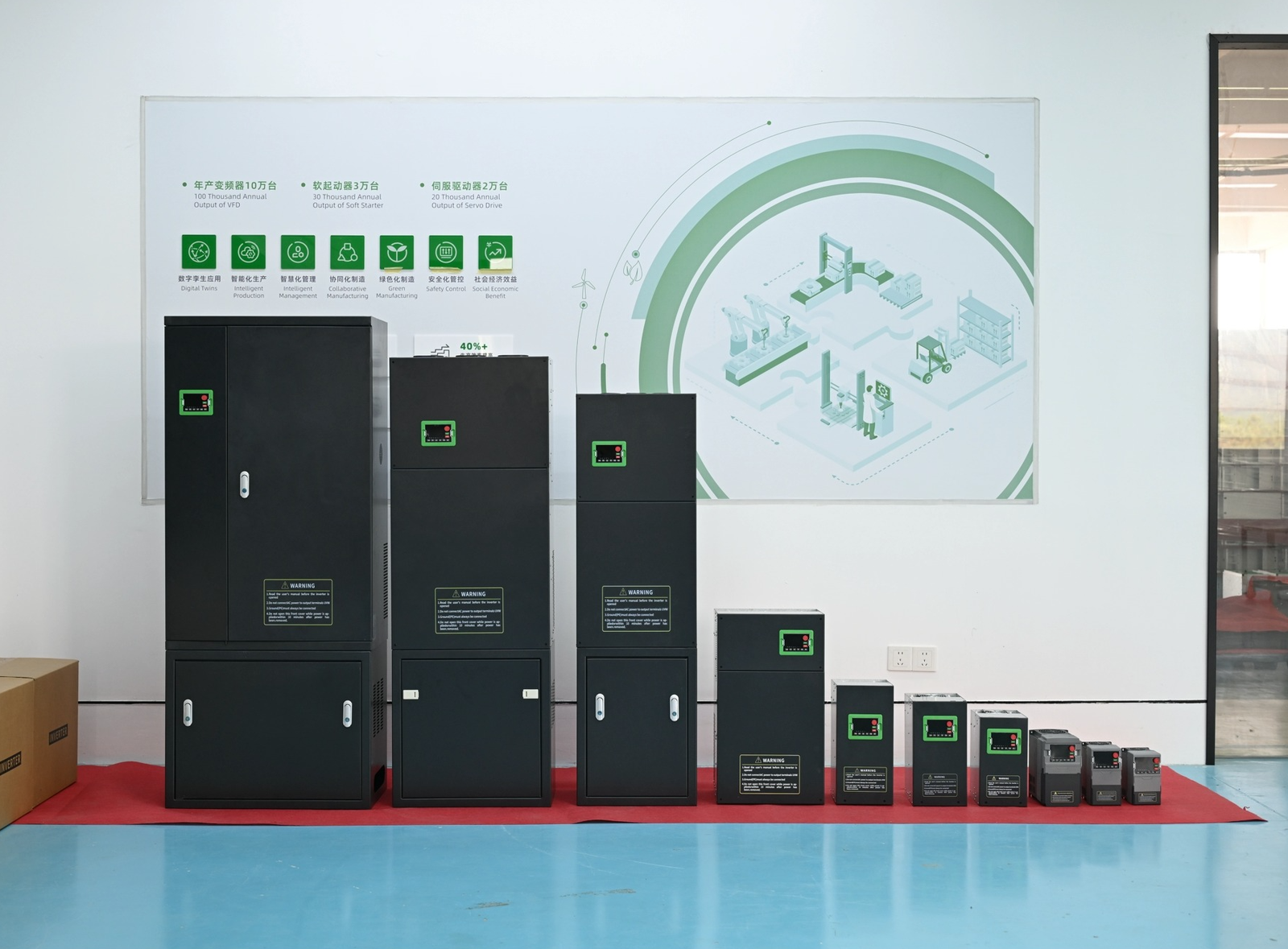
Technical Specifications: PV-T2 vs. PV-T4 Solar Pump Drives
| Technical Parameter | PV-T2 Series | PV-T4 Series |
|---|---|---|
| PV Input Voltage Range | 150V DC – 450V DC | 300V DC – 800V DC |
| PV Input Phase | Single Phase (1PH) | Three Phase (3PH) |
| Motor Output Voltage | 3-Phase 220V AC | 3-Phase 380V AC |
| Motor Output Phase | Three Phase (3PH) | Three Phase (3PH) |
| MPPT Tracking Efficiency | ≥ 99.5% | ≥ 99.5% |
| Control Modes | MPPT Mode / CVT Mode | MPPT Mode / CVT Mode |
| Typical Motor Power Range | 0.75 kW – 15 kW | 2.2 kW – 90 kW |
| Dry-Run Protection | Integrated (Auto-restart capable) | Integrated (Auto-restart capable) |
| Water Level Sensor Support | Yes (Digital Input Terminals) | Yes (Digital Input Terminals) |
| Communication Protocol | RS485 (Modbus RTU) | RS485 (Modbus RTU) |
| Protection Rating | IP20 (IP65 enclosure optional) | IP20 (IP65 enclosure optional) |
Real-World B2B Applications for Solar Pump Inverters
Understanding the practical applications of these drives helps distributors and EPC contractors match the right equipment to specific client needs. The versatility of the PV-T2 and PV-T4 series makes them indispensable across various sectors.
- Large-Scale Agricultural Solar Irrigation: For commercial farming operations requiring high-volume water transfer, the PV-T4 Series is the ideal solution. Its 3-phase 380V output handles high-power submersible and surface centrifugal pumps, ensuring consistent water flow for drip and sprinkler irrigation systems even during partial cloud cover, directly increasing crop yields.
- Remote Off-Grid Community Water Supply: In rural villages or remote mining camps where grid extension is economically unfeasible, the PV-T2 Series provides a reliable 3-phase 220V output for medium-sized borehole pumps. Integrated water level sensor support allows the system to automatically fill elevated storage tanks during the day and shut off when full, providing a zero-manual-intervention water supply.
- Hybrid Grid-Solar Water Treatment Plants: Municipalities and industrial facilities looking to reduce peak grid demand can utilize these inverters in CVT mode alongside standard grid-tied drives. By seamlessly switching between solar and grid power, facilities can maintain continuous operation of aeration blowers and dosing pumps while significantly lowering their carbon footprint and operational energy costs.
Frequently Asked Questions
What is the difference between MPPT mode and CVT mode in a PV pump inverter?
MPPT mode dynamically tracks the solar array’s maximum power point to optimize energy harvest from the PV panels under varying sunlight conditions. CVT (Constant Voltage/Constant Frequency) mode locks the output to a fixed voltage and frequency, which is primarily used when the inverter is connected to a stable grid or a diesel generator for hybrid operation.
How does dry-run protection work in these solar water pump drives?
Dry-run protection monitors the motor’s electrical load and detects when the pump is running without water, which causes a sudden drop in mechanical load. Upon detection, the inverter immediately stops the motor to prevent overheating and mechanical seal failure, and it can be configured to automatically retry after a set interval.
Can I use a standard VFD instead of a dedicated MPPT solar pump inverter?
While a standard VFD can change motor speed, it lacks the specialized DC-DC conversion and MPPT algorithm required to efficiently extract power directly from high-voltage solar arrays. Dedicated PV pump inverters are specifically designed to handle wide DC input voltage ranges and include built-in protections tailored for solar pumping, making them vastly more efficient and reliable for off-grid applications.
What is the maximum MPPT tracking efficiency of Lakinele’s PV series?
Both the PV-T2 and PV-T4 series boast a maximum MPPT tracking efficiency of ≥ 99.5%. This high efficiency ensures that minimal energy is lost during the conversion process, maximizing the daily water yield and overall return on investment for the end user.
How do I integrate a water level sensor with the PV-T2 or PV-T4 series?
The inverters feature programmable digital input terminals that can be configured to accept signals from external float switches or ultrasonic water level sensors. By wiring the sensor to the designated input terminal and setting the corresponding parameter in the drive’s menu, the inverter will automatically start or stop the pump based on the water level status.
Partner with Lakinele for Your Next Solar Pumping Project
Sourcing reliable, high-efficiency power electronics is critical for the success of your renewable energy projects. As a leading Chinese VFD manufacturer, Lakinele provides international wholesale buyers, distributors, and EPC contractors with top-tier solar pumping solutions. Our PV-T2 and PV-T4 series are engineered to deliver maximum water yield, robust motor protection, and seamless integration into both off-grid and hybrid systems. By partnering directly with us, you gain access to competitive factory pricing, comprehensive technical support, and strict quality control that ensures your projects are delivered on time and within budget.
Explore our complete range of industrial drives and solar solutions by visiting our All Products page. Whether you need specialized solar pump inverters or standard industrial VFDs, our engineering team is ready to support your specifications.