
How to Size a Solar Pump Inverter: Match PV Panel Watts, Pump Motor kW and Head
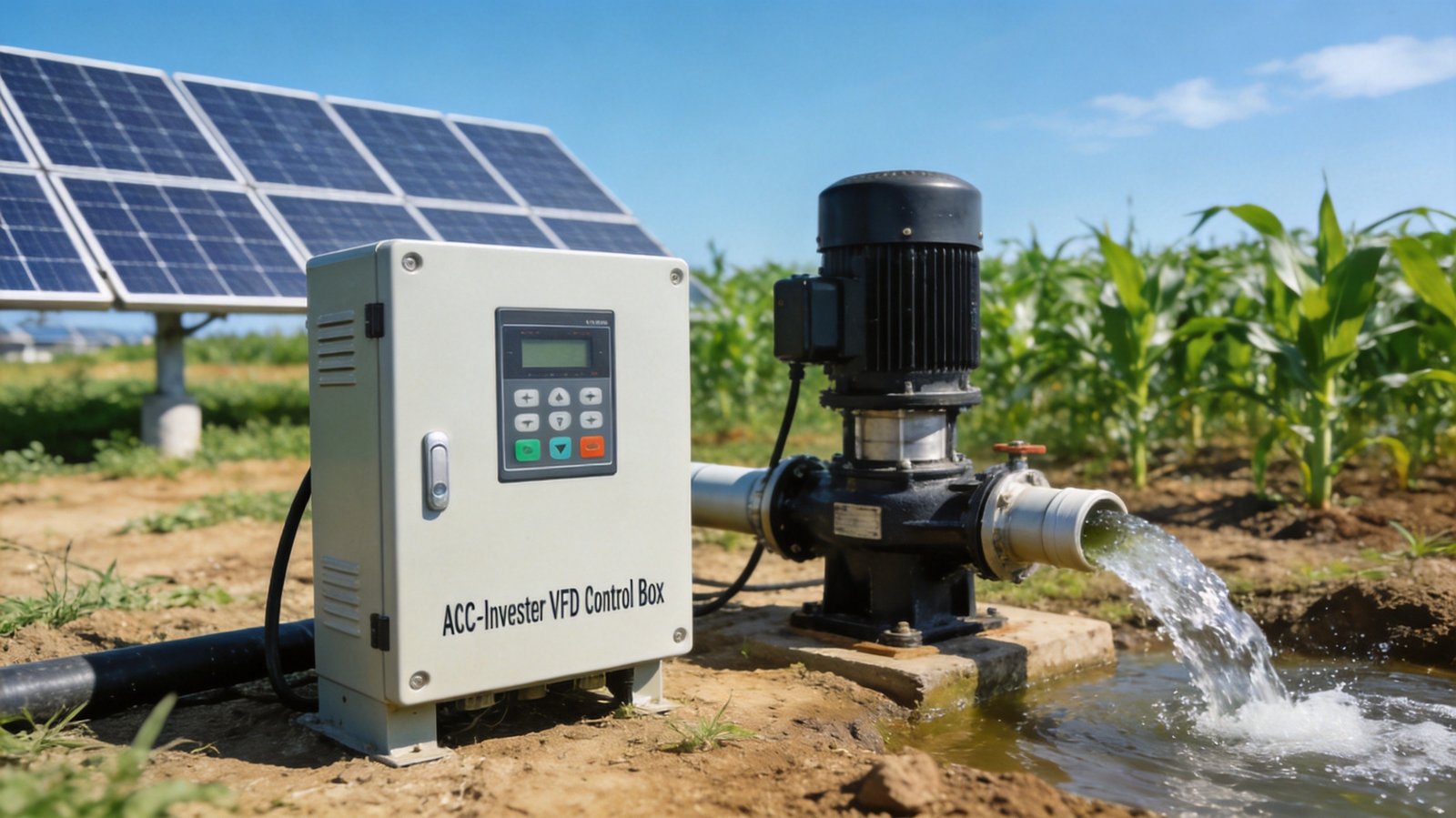
Introduction: The Hidden Costs of Improper Solar Pump Inverter Sizing
For international wholesale buyers, distributors, and EPC contractors, deploying off-grid solar water pumping systems presents a unique set of engineering challenges. The most frequent point of failure in these projects is not the pump itself, but the improper matching of the solar array to the drive system. When solar pump inverter sizing is calculated incorrectly, the system either stalls under partial cloud cover or suffers from overvoltage faults during peak irradiance. EPC contractors often face costly site revisits and damaged reputations when a system fails to deliver the promised water volume.
The root cause of these failures usually lies in poor PV panel wattage matching and a fundamental misunderstanding of solar pump head calculation. If the PV array is undersized relative to the pump motor kW, the inverter will struggle to reach the minimum starting voltage, resulting in delayed operation and reduced daily water yield. Conversely, an oversized PV array without proper inverter voltage tolerance will trigger overvoltage protection, shutting down the system entirely. Furthermore, ignoring the total dynamic head (TDH) and pipe friction losses can lead to severe flow rate reductions. In this comprehensive technical guide, we will break down the exact methodologies required to match your PV panel watts, pump motor kW, and total dynamic head to ensure reliable, high-yield water pumping for your clients.

Technical Guide: Matching PV Array, Motor Power, and Total Dynamic Head
Successful solar pumping relies on the seamless integration of three critical variables: the photovoltaic array capacity, the submersible or surface pump motor power, and the hydraulic requirements of the application. Unlike standard grid-tied applications where a conventional drive like the S2 Series or H2 Series can operate with stable input power, solar pump inverters must utilize advanced Maximum Power Point Tracking (MPPT) to handle fluctuating solar irradiance.
1. PV Panel Wattage Matching and the 1.3 to 1.5x Rule
The golden rule of PV panel wattage matching is to size the solar array at 1.3 to 1.5 times the rated pump motor kW. For example, if you are driving a 4.0 kW submersible pump, the recommended PV array capacity should be between 5.2 kW and 6.0 kW. This oversizing compensates for real-world inefficiencies, including temperature derating of the panels, dust accumulation, wiring losses, and the fact that solar irradiance rarely hits the absolute peak 1000 W/m² consistently throughout the day. The dedicated PV-T2 Series (1PH 220V PV input, ideal for small farms up to 2.2 kW) and the robust PV-T4 Series (3PH 380V PV input, designed for larger installations from 3.7 kW to 15+ kW) feature wide MPPT voltage ranges to accommodate this exact oversizing strategy without triggering faults.
2. Solar Pump Head Calculation: Static vs. Friction Head
Accurate solar pump head calculation is essential because the inverter adjusts the motor speed based on available solar power to maintain optimal torque. Total Dynamic Head (TDH) is the sum of Static Head (the vertical distance from the water level to the discharge point) and Friction Head (the resistance caused by water moving through pipes and fittings). If the TDH is miscalculated, the pump may operate at a higher speed than the available solar power can sustain, causing the inverter to repeatedly trip on under-voltage.
3. Head vs. Flow Trade-offs and Pipe Diameter Selection
In solar pumping, flow rate is directly proportional to solar irradiance, but it is inversely affected by head. As the head increases, the flow rate drops. To minimize friction head and maximize flow, proper pipe diameter selection is critical. A general rule of thumb is to keep water velocity in the pipe below 1.5 meters per second. Using a pipe diameter that is too small exponentially increases friction losses, forcing the pump to work harder and reducing overall efficiency. Always consult friction loss charts to select a pipe size that balances material costs with hydraulic efficiency.
While standard industrial drives like the N/T Series or the S3 Series are perfect for grid-powered industrial machinery, they lack the specialized solar MPPT algorithms and pump protection logic (like dry-run protection) required for off-grid water extraction. For hybrid setups where grid or generator backup is needed, our engineering team can help you integrate standard VFDs with our solar-specific hardware.
Solar Pump Inverter Sizing Parameters and PV Array Requirements
The following table provides a technical baseline for matching your pump motor kW to the required PV array wattage and selecting the appropriate Lakinele inverter series. These parameters assume standard crystalline silicon panels and a typical TDH of up to 150 meters.
| Pump Motor kW | Min PV Array Wattage (1.3x) | Max PV Array Wattage (1.5x) | Recommended Inverter Series | Max PV Input Voltage (VDC) | Typical Max Head (m) |
|---|---|---|---|---|---|
| 0.75 kW | 0.97 kW | 1.12 kW | PV-T2 Series (1PH 220V) | 500 VDC | 80 – 120 m |
| 1.5 kW | 1.95 kW | 2.25 kW | PV-T2 Series (1PH 220V) | 500 VDC | 100 – 150 m |
| 2.2 kW | 2.86 kW | 3.30 kW | PV-T2 Series (1PH 220V) | 500 VDC | 120 – 180 m |
| 3.7 kW | 4.81 kW | 5.55 kW | PV-T4 Series (3PH 380V) | 800 VDC | 150 – 220 m |
| 5.5 kW | 7.15 kW | 8.25 kW | PV-T4 Series (3PH 380V) | 800 VDC | 180 – 250 m |
| 7.5 kW | 9.75 kW | 11.25 kW | PV-T4 Series (3PH 380V) | 800 VDC | 200 – 280 m |
| 11.0 kW | 14.30 kW | 16.50 kW | PV-T4 Series (3PH 380V) | 800 VDC | 220 – 300 m |
Real-World B2B Application Scenarios
Understanding how these technical parameters apply to real-world projects is crucial for distributors and EPC contractors. Here are three common scenarios where proper sizing dictates project success:
- Small-Scale Agriculture and Drip Irrigation: For smallholder farms requiring reliable daily water flow for drip irrigation, the PV-T2 Series (1PH 220V) is the ideal solution. By pairing a 1.5 kW submersible pump with a 2.2 kW PV array, farmers can achieve consistent water pressure without the need for complex three-phase infrastructure, significantly lowering installation costs.
- Large-Scale Commercial Farming and Livestock: Commercial operations with large herds or extensive crop fields require high-volume water extraction from deep boreholes. The PV-T4 Series (3PH 380V) handles 7.5 kW to 11.0 kW motors effortlessly. By accurately calculating the TDH for a 250-meter borehole and utilizing appropriately sized discharge piping, EPC contractors can maximize the daily water yield during peak sunlight hours.
- Municipal Water Supply and Hybrid Setups: For village water supply projects that require 24/7 reliability, a hybrid approach is often necessary. While the PV series handles daytime solar pumping, standard three-phase drives like the N/T Series can be integrated to run the pump from the grid or a diesel generator at night, ensuring uninterrupted municipal water distribution.
Frequently Asked Questions
What is the standard ratio for PV panel wattage matching to the pump motor kW?
The industry standard is to size the PV array at 1.3 to 1.5 times the rated pump motor kW. This oversizing compensates for real-world inefficiencies such as temperature derating, dust, and wiring losses, ensuring the inverter receives enough power to start and run the pump efficiently throughout the day.
How does pipe diameter affect solar pump head calculation?
Pipe diameter directly impacts the friction head component of the Total Dynamic Head (TDH). Using a pipe that is too small increases water velocity and exponentially raises friction losses, which forces the pump to work harder and reduces the overall flow rate. It is recommended to keep water velocity below 1.5 m/s by selecting an appropriately sized pipe.
Can I use a standard VFD instead of a dedicated solar pump inverter?
While standard VFDs like our N/T or S3 Series are excellent for grid-powered applications, they lack the specialized MPPT algorithms required to track fluctuating solar power. Dedicated solar pump inverters also include specific pump protection features, such as dry-run protection and sleep/wake modes, which are essential for off-grid water extraction.
What happens if the PV array wattage is too low for the motor?
If the PV array is undersized, the inverter will struggle to reach the minimum starting voltage, especially in the early morning or late afternoon. This results in delayed operation, reduced daily water yield, and potential under-voltage fault tripping when the pump attempts to draw more current than the panels can supply.
Does Lakinele offer OEM/ODM services for international distributors?
Yes, Lakinele provides comprehensive OEM and ODM services for global distributors and EPC contractors. We offer custom firmware configurations, branded enclosures, and tailored packaging to help you build a strong, localized brand presence in your target market while leveraging our advanced manufacturing capabilities.
Optimize Your Solar Pumping Projects with Lakinele
Proper system design is the cornerstone of a successful solar water pumping project. By accurately matching your PV panel watts to the pump motor kW and meticulously calculating the total dynamic head, you can ensure maximum efficiency and longevity for your installations. Lakinele’s PV-T2 Series and PV-T4 Series are engineered with advanced MPPT technology, wide voltage tolerances, and robust pump protection logic to handle the most demanding off-grid environments.
Whether you are sourcing components for small-scale agricultural projects or engineering large-scale municipal water systems, our technical team is here to support your specific requirements. We provide comprehensive technical documentation, rapid prototyping, and reliable after-sales support to ensure your projects are delivered on time and within budget. Reach out to our engineering team today to review your project specifications and optimize your system design.
Take the guesswork out of your next solar pumping project. Contact our experts now for a Free Solar Pump Sizing Consultation and discover how Lakinele’s advanced drive solutions can elevate your product offerings.
Free Solar Pump Sizing Consultation
Contact Sales Team
Explore our complete range of industrial drives and solar pumping solutions by visiting our All Products