
Understanding the Motor Control Dilemma: VFD vs Soft Starter
When specifying motor control equipment for large-scale industrial projects, EPC contractors and wholesale distributors frequently encounter a critical engineering dilemma: choosing between a Variable Frequency Drive (VFD) and a soft starter. Both devices mitigate the severe mechanical and electrical stresses associated with across-the-line motor starting, but they operate on fundamentally different principles. Selecting the wrong solution can lead to premature equipment failure, excessive energy consumption, or unnecessary capital expenditure that eats into project margins. The debate of VFD vs soft starter is not just about starting a motor; it is about evaluating the entire lifecycle of the motor control comparison. A soft starter simply ramps up the voltage to reduce inrush current, while a VFD controls both voltage and frequency to manage the entire operational profile of the motor. Understanding the distinct VFD advantages is crucial for international buyers looking to optimize system efficiency, reduce mechanical wear on conveyor belts, or manage peak demand charges on the power grid. In this comprehensive technical guide, we will break down the operational mechanics, cost-benefit analysis, and specific application scenarios to help you make an informed sourcing decision for your next industrial project.
Technical Deep Dive: How VFDs and Soft Starters Differ
To make the right procurement choice, it is essential to understand the underlying power electronics and control algorithms of each device. A soft starter utilizes silicon-controlled rectifiers (SCRs) or thyristors to gradually increase the voltage applied to the motor stator. This limits the starting current to roughly 200-400% of the full load amps (FLA) and reduces mechanical shock to the driven equipment. However, once the motor reaches full speed, the SCRs are typically bypassed by an internal contactor, and the motor runs directly on the fixed grid frequency (50Hz or 60Hz). It offers absolutely no control over the running speed, torque, or process variables once the start sequence is complete.
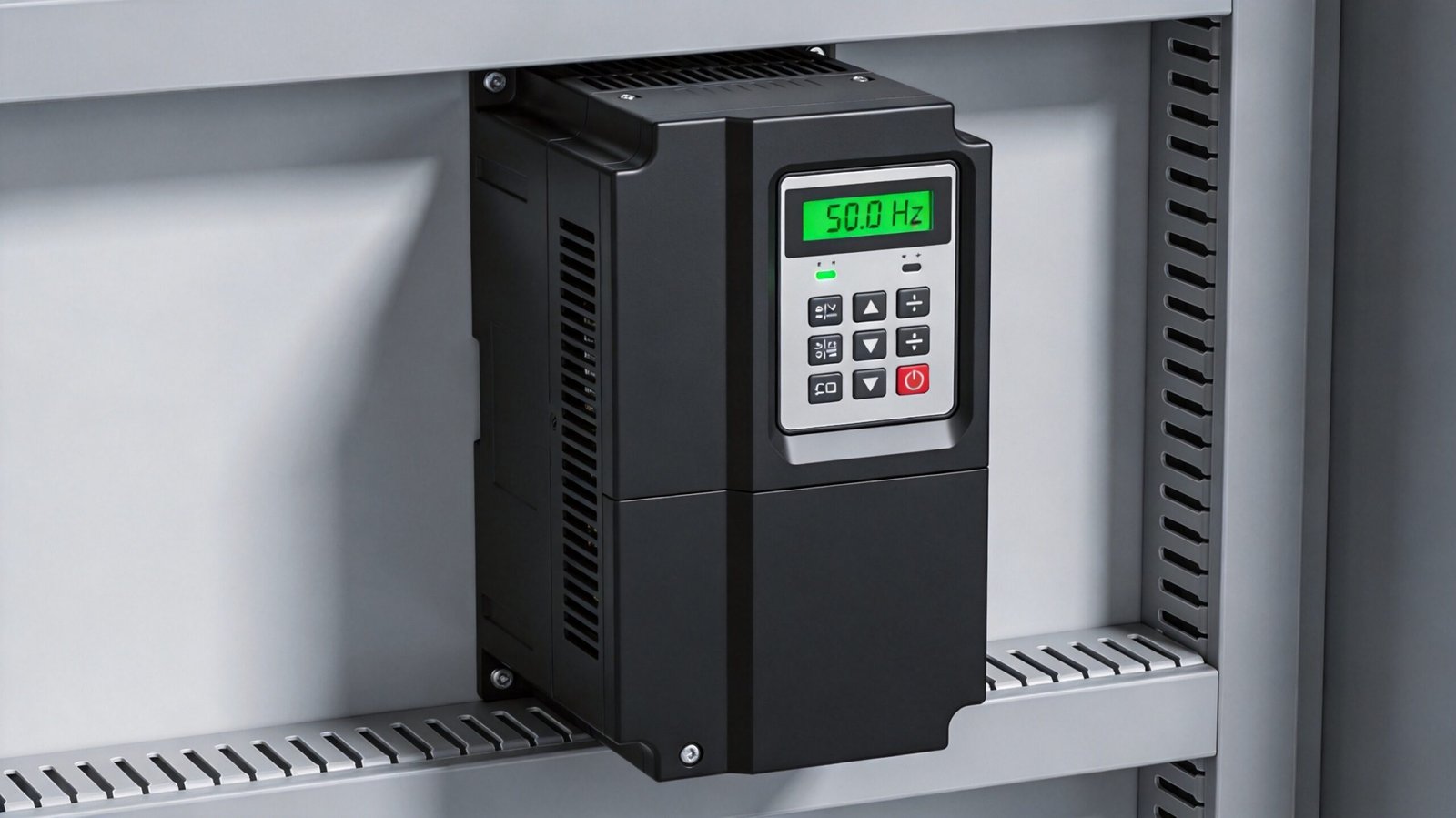
Conversely, a Variable Frequency Drive (VFD) is a much more complex and intelligent system. It converts the incoming AC power to DC via a diode rectifier, filters it through a DC bus using capacitors, and then inverts it back to AC using Insulated Gate Bipolar Transistors (IGBTs). By altering the output frequency and voltage simultaneously using Pulse Width Modulation (PWM) to maintain a constant V/Hz ratio, a VFD provides precise control over motor speed and torque from zero RPM all the way to maximum speed.
The VFD advantages become particularly evident in applications requiring continuous speed adjustment or precise torque control. For instance, in HVAC systems or municipal pump stations, using the Lakinele N/T Series Three-Phase 380V Inverter allows facilities to match motor speed exactly to the process demand. This yields energy savings of up to 50% compared to throttling valves or dampers, drastically reducing the total cost of ownership. Furthermore, VFDs provide superior protection features, including phase loss, over-voltage, under-voltage, and stall prevention, which protect both the motor and the drive itself.
For smaller-scale applications or single-phase power environments, selecting the right drive is equally critical for global distributors. Buyers sourcing for light commercial or residential-adjacent industrial use often specify the S2 Series Single-to-Three-Phase 220V Inverter to run standard 3-phase motors on single-phase grid power without derating the motor. Similarly, for heavier single-phase input requirements in machinery, the S3 Series Single-to-Three-Phase 380V Inverter provides robust performance, ensuring smooth acceleration and deceleration while protecting the mechanical drivetrain. Ultimately, while a soft starter is a cost-effective solution for simple starting needs, a VFD is an intelligent motor controller that optimizes the entire production process.
Technical Parameter Comparison: VFD vs Soft Starter
| Technical Parameter | Soft Starter | Variable Frequency Drive (VFD) |
|---|---|---|
| Starting Method | Voltage ramp via SCRs/Thyristors | Frequency and Voltage ramp via IGBTs |
| Starting Current | 200% – 400% of FLA | 100% – 150% of FLA |
| Speed Control | None (Fixed grid speed after start) | Full range (0% to 100%+ of base speed) |
| Torque Control | Current limit start only | Precise torque control (Constant/Variable) |
| Energy Saving Potential | Minimal (Only reduces no-load losses slightly) | High (Up to 50% in centrifugal pumps/fans) |
| Harmonic Distortion (THDi) | High during start, low during run | Constant (Mitigated with DC chokes/filters) |
| Motor Heating at Low Speed | N/A (Runs at full speed) | Requires external fan cooling below 20% speed |
| Relative Capital Cost | Lower (Approx. 30-50% of VFD cost) | Higher (But lower total cost of ownership) |
Real-World B2B Application Scenarios
Choosing the right motor controller depends heavily on the specific mechanical and electrical requirements of the end-user’s facility. Here is how international buyers and EPC contractors should map these technologies to real-world applications:
- Centrifugal Pumps and HVAC Fans: These applications require continuous flow adjustment and are classified as variable torque loads. A VFD is the mandatory choice here. By varying the motor speed to match the exact demand, the VFD drastically reduces energy consumption according to the affinity laws and eliminates the water hammer effect, which a soft starter cannot achieve once the motor is at full speed.
- Heavy-Duty Conveyors and Crushers: For long conveyor belts, the primary concern is reducing mechanical tension, belt snapping, and gearbox wear during startup. A soft starter is highly cost-effective here, as it provides a smooth voltage ramp to limit starting torque. However, if the conveyor requires variable speed to regulate material feed rates or prevent spillage, a VFD becomes absolutely necessary.
- Compressors and CNC Machine Tools: In manufacturing environments where spindle speeds or air output must change dynamically based on the product being machined, VFDs are essential. They provide the precise RPM control and high starting torque required for these demanding constant torque processes, ensuring product quality, tight tolerances, and machine longevity.
Frequently Asked Questions
Can a soft starter be used instead of a VFD to save energy in a pump application?
No, a soft starter cannot save significant energy in a pump application because it only controls the motor during the starting phase. Once the motor reaches full speed, the soft starter bypasses its internal components, and the motor runs at full grid speed. To achieve energy savings in pumps, you must use a VFD to continuously adjust the motor speed to match the actual flow demand.
What is the typical lead time and MOQ for wholesale VFD orders?
For standard models like our N/T and S series, we typically maintain sufficient stock to fulfill wholesale orders with a lead time of 3 to 7 business days. Our Minimum Order Quantity (MOQ) is highly flexible, often starting at just one unit for sample testing, though volume discounts apply for larger distributor orders. Please contact our sales team to discuss specific stocking programs for your region.
Do I need to derate the motor when using a single-to-three-phase VFD?
When using a single-to-three-phase VFD, such as our S2 or S3 series, it is generally recommended to use a motor rated for the output voltage of the drive. While you do not necessarily need to derate the motor’s power rating if the drive is properly sized, you must ensure the motor’s insulation is inverter-duty rated. This is crucial to handle the high-frequency voltage spikes generated by the IGBT switching without premature failure.
How do harmonic distortions differ between soft starters and VFDs?
Soft starters generate high harmonic distortion only during the brief starting period, which usually does not impact the overall grid quality significantly. VFDs generate harmonics continuously while running, but these can be easily mitigated by adding DC link chokes or external AC line reactors to meet strict international compliance standards.
Can a VFD operate a standard induction motor at very low speeds continuously?
A standard TEFC induction motor can operate at low speeds via a VFD, but its internal cooling fan will also slow down, potentially causing overheating. If your application requires continuous operation below 20% of the base speed, you should specify an inverter-duty motor with an independent cooling fan. This ensures proper thermal management and prevents insulation breakdown during prolonged low-speed operation.
Optimize Your Motor Control Strategy with Lakinele
Selecting the right motor control solution is critical for the efficiency, reliability, and profitability of your industrial projects. Whether you need the robust three-phase performance of our N/T Series, the versatile single-to-three-phase capabilities of the S2 Series and S3 Series, or the compact H2 Series for light commercial use, Lakinele provides high-quality, cost-effective drives tailored for the global market. Explore our complete range of industrial automation solutions by visiting our All Products page. Don’t let suboptimal motor control drain your energy budget or cause mechanical failures. Partner with a reliable Chinese VFD manufacturer that understands the rigorous demands of international EPC contractors and distributors, offering full OEM/ODM support and global certifications.