
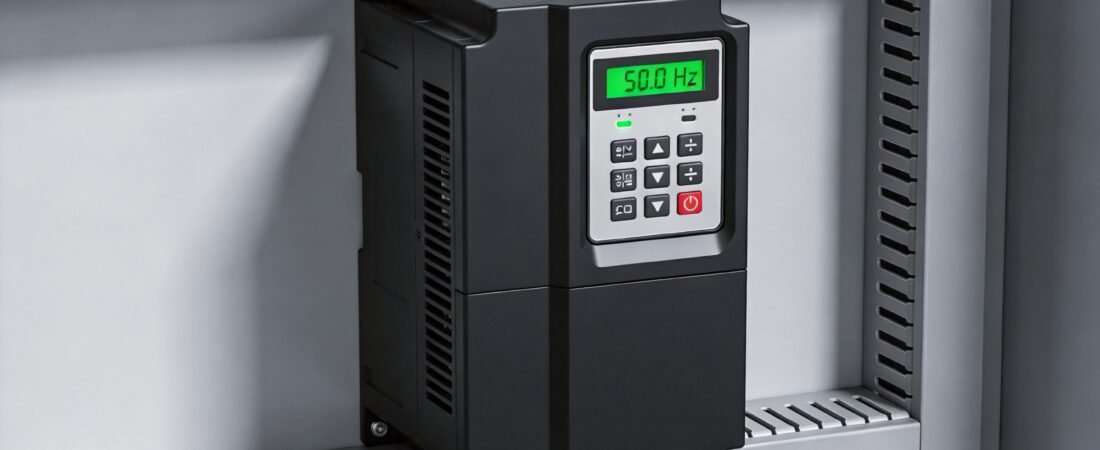
VFD Quality Control: What to Check Before Ordering?
Sourcing Variable Frequency Drives (VFDs) for international distribution, wholesale supply, or large-scale EPC projects carries significant financial and operational risks. When importing industrial automation equipment from overseas manufacturing hubs, the absolute last thing a distributor or contractor needs is a batch of drives that fail on-site due to poor manufacturing standards, substandard components, or inadequate pre-shipment inspections. Implementing a rigorous VFD quality control protocol is not just a recommended best practice; it is a critical, non-negotiable safeguard for your brand reputation, profit margins, and project timelines. Many B2B buyers unfortunately overlook the deep technical nuances of VFD testing and VFD certification before finalizing bulk purchase orders, which frequently leads to costly field replacements, delayed commissioning, and strained client relationships. The true cost of poor quality extends far beyond the initial unit price, encompassing expedited shipping for replacements, on-site technician labor, and the long-term damage to your market credibility. To effectively mitigate these risks, procurement teams and engineering managers must demand a comprehensive, transparent QC checklist from their manufacturing partners. This ensures that every single component, from the high-power IGBT modules to the sensitive microprocessor control boards, meets stringent international safety and performance standards. In this comprehensive guide, we will break down exactly what international buyers must verify, inspect, and document before placing their next bulk order for industrial inverters.
Essential Pre-Order Quality Verification Steps
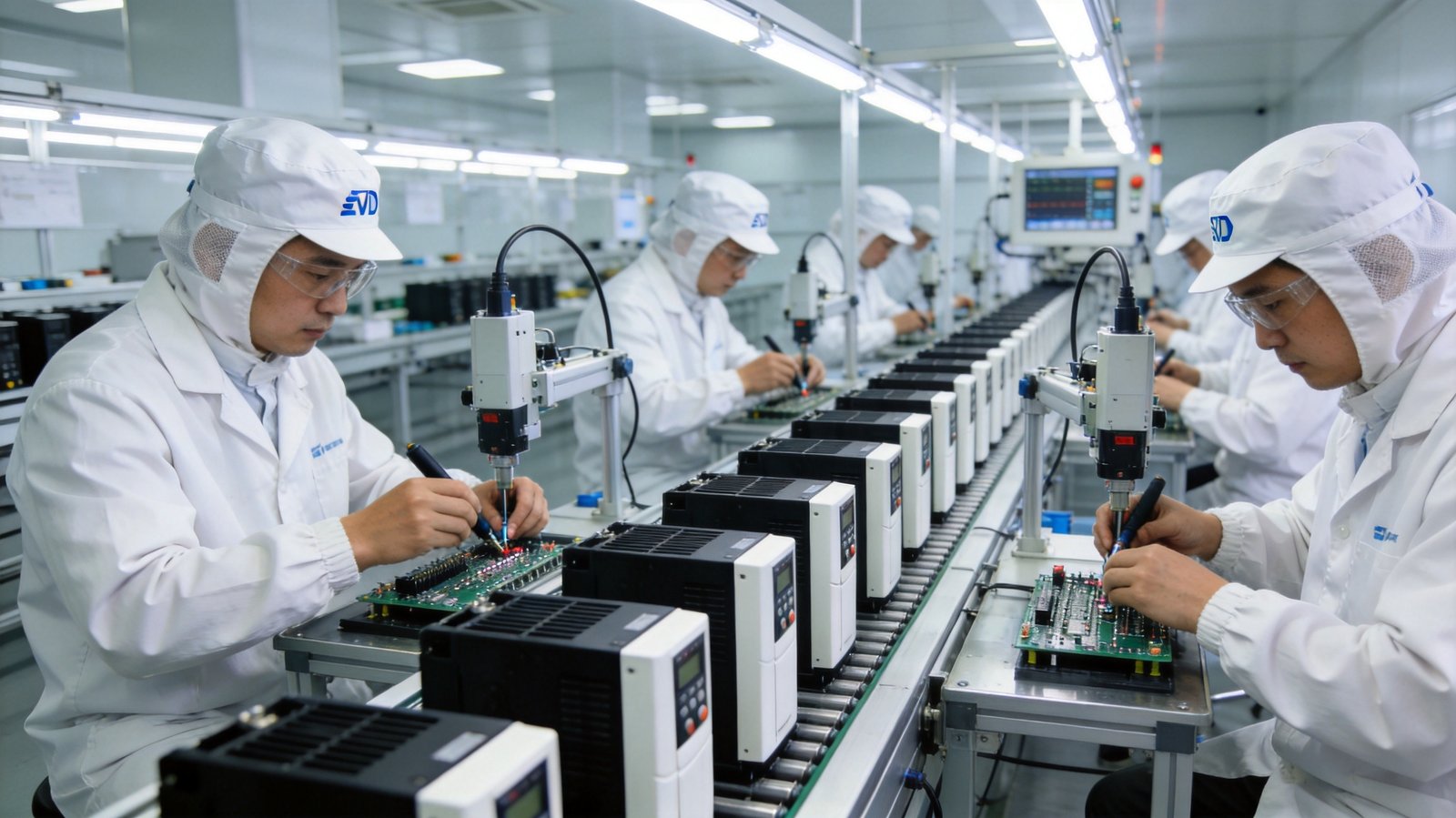
A robust quality assurance process begins long before the drives are physically packed and shipped. When evaluating a manufacturer’s VFD quality control procedures, discerning buyers must focus intensely on three core areas: component sourcing and bill of materials (BOM) verification, assembly and environmental protection standards, and rigorous functional VFD testing.
First, you must inspect the BOM to ensure the use of premium power electronics. High-quality drives utilize top-tier IGBT modules and low-ESR electrolytic capacitors specifically designed for high-temperature endurance and long operational lifespans. For instance, our heavy-duty 300N T4 Series is engineered with premium power modules and oversized heat sinks to ensure absolute longevity in demanding three-phase 380V industrial environments.
Second, evaluate the physical assembly and environmental protection mechanisms. Industrial environments are inherently harsh, so the main control PCBs must feature a thick, uniform conformal coating to prevent dust, moisture, and corrosive gas ingress. Furthermore, thermal management is critical for drive reliability. Verify that the cooling fans are rated for continuous duty and that the heat sinks are properly sized for the declared power ratings. For single-phase to three-phase conversions, models like the S2 Series and the S3 Series undergo strict thermal cycling tests to ensure the internal rectifier and inverter sections do not overheat during continuous, high-torque operation. Additionally, single-phase models like the H2 Series require specialized input filtering to handle the higher ripple currents associated with single-phase rectification.
Beyond hardware, firmware and software validation are equally critical. The control algorithms must be tested for stability across the entire speed range, ensuring no oscillations or hunting occur during low-speed operations. Furthermore, environmental stress screening (ESS) should be part of the protocol. Drives should be placed in temperature and humidity chambers to simulate extreme operating conditions, verifying that the thermal management systems and protective shutdown features activate correctly before the components reach their failure thresholds.
Third, demand comprehensive VFD certification documentation and functional test reports. This includes CE, RoHS, and specific regional compliance marks, alongside Factory Acceptance Test (FAT) data. During the FAT, random samples from the batch should be subjected to full-load running tests, hi-pot (dielectric withstand) testing, and insulation resistance checks. This exhaustive VFD testing verifies that the drive can handle its rated current without tripping and that the internal software algorithms for V/f control and vector control are perfectly calibrated. By integrating these detailed steps into your QC checklist, you ensure that the inverters you distribute or install will perform flawlessly under real-world conditions.
Technical Specifications and Quality Benchmarks
| Series | Input/Output Voltage | Power Range | Key Quality Feature | Target Application |
|---|---|---|---|---|
| 300N T4 Series | 3-Phase 380V | 0.75kW – 400kW | Industrial-grade IGBTs, 100% full-load tested, thick conformal coating | Heavy machinery, CNC, extruders, mining |
| S2 Series | 1-Phase 220V to 3-Phase 220V | 0.75kW – 2.2kW | Enhanced thermal coating, single-to-three phase stability, optimized heat sink | Small machine tools, packaging, conveyors |
| S3 Series | 1-Phase 220V to 3-Phase 380V | 0.75kW – 2.2kW | High-voltage input capacitors, robust rectifier bridge, strict thermal cycling | Industrial fans, pumps, material handling |
| H2 Series | 1-Phase 220V to 1-Phase 220V | 0.75kW – 2.2kW | Compact design, specialized input filtering, optimized PCB layout for heat dissipation | Light commercial, HVAC, blowers, ventilation |
Real-World B2B Application Scenarios
Understanding how these stringent quality benchmarks translate to real-world performance is crucial for EPC contractors, system integrators, and wholesale distributors. When specifying drives for critical infrastructure or manufacturing lines, the inherent quality of the VFD directly impacts the overall uptime and efficiency of the entire system.
- Water Treatment and Municipal Pumping Stations: Municipal infrastructure projects require drives that can handle continuous variable torque loads while resisting harsh environmental conditions. Utilizing the 300N T4 Series ensures that large extraction pumps and aeration blowers operate efficiently without overheating. This is backed by rigorous IP rating validations and thick conformal-coated boards that resist the high humidity and chemical exposure typical in water treatment facilities.
- Woodworking, Textiles, and CNC Machinery: Precision and dynamic response are paramount in discrete manufacturing. Distributors supplying spindle drives, feed motors, and conveyor systems rely heavily on the S2 and S3 Series. The strict VFD testing for low-speed torque, high-frequency response, and current limiting ensures smooth cutting operations, prevents motor stalling during heavy material removal, and maintains consistent tension in textile winding applications.
- HVAC and Commercial Ventilation Systems: For light commercial and building automation applications, physical footprint, acoustic noise, and energy efficiency are key purchasing drivers. The H2 Series provides highly reliable single-phase speed control for centrifugal fans and exhaust blowers. Rigorous quality checks on the internal relays, capacitors, and fan motors guarantee a long operational lifespan, significantly reducing maintenance callbacks and warranty claims for facility management contractors.
Frequently Asked Questions
What specific VFD certification documents should I request before placing a bulk order?
You should always request the CE certificate, RoHS compliance reports, and specific test reports for electromagnetic compatibility (EMC) and dielectric strength. These documents prove that the drives meet international safety standards and are legally compliant for importation and operation within your target market. Without these, you risk customs delays and potential liability issues.
How can I verify the VFD testing process without visiting the factory in person?
Reputable manufacturers provide detailed Factory Acceptance Test (FAT) videos, digital test reports, and burn-in logs for every production batch. You can also hire a trusted third-party inspection agency like SGS or TÜV to conduct comprehensive pre-shipment inspections based on your specific QC checklist. This remote verification ensures complete transparency and accountability.
What are the most common component failures to check for in a QC checklist?
The most common failures involve inadequate PCB conformal coating leading to short circuits, and the use of low-grade electrolytic capacitors that bulge or fail under high thermal stress. Ensure your checklist mandates a visual and microscopic inspection of the coating thickness, and strictly verifies the capacitor brand, voltage rating, and maximum temperature tolerance. Catching these issues early prevents catastrophic field failures.
Can I customize the VFD quality control parameters for my specific OEM branding?
Yes, most established manufacturers offer comprehensive OEM services where you can define specific testing parameters, custom boot-up logos, specific I/O terminal configurations, and tailored firmware limits. Discuss these custom requirements during the initial sampling and prototyping phase to ensure they are fully integrated into the final production QC checklist. This guarantees that your branded products meet your exact market expectations.
How do I ensure compatibility between the VFD and my existing industrial motors?
Always verify the motor nameplate data, including rated current, voltage, frequency, and insulation class, against the VFD’s continuous output current ratings and switching frequency capabilities. It is highly recommended to order a sample unit first and conduct a physical run-test with your specific motor to validate the V/f curve, auto-tuning results, and parameter settings. This physical verification eliminates guesswork and ensures optimal system performance.
Secure Your Supply Chain with Certified Quality
Don’t leave your critical project timelines, profit margins, and brand reputation to chance in a competitive global market. Partnering with a reliable, transparent manufacturer means having full visibility and control over the production, testing, and shipping phases. At Lakinele, we stand firmly behind the advanced engineering and rigorous testing of our 300N T4 Series, S2 Series, S3 Series, and H2 Series with comprehensive, verifiable documentation. Whether you are a wholesale distributor looking to expand your automation catalog or an EPC contractor needing highly reliable drives for an upcoming infrastructure project, we provide all necessary compliance, testing, and origin records. Review our complete range of industrial automation solutions and technical specifications at our products page. To get started on your next procurement cycle, simply reach out to our dedicated engineering and sales team to discuss your specific technical requirements, request samples, and obtain your compliance documentation.