
How to Size VFD for Your Motor? Complete Calculation Guide
As an EPC contractor, industrial distributor, or equipment importer, few issues are as costly and reputation-damaging as a misapplied Variable Frequency Drive. When you specify a drive without performing a rigorous VFD calculation, the negative consequences cascade through the entire project lifecycle. Undersized drives will inevitably trip on overcurrent during peak mechanical loads, halting critical production lines, triggering fault codes, and leading to expensive field service calls. Conversely, oversized drives unnecessarily inflate your capital expenditures, waste valuable electrical panel space, and can cause motor overheating due to excessive voltage spikes at low speeds.
Proper VFD sizing is not merely about matching the kilowatt nameplate; it requires a comprehensive understanding of the motor’s full load amps (FLA), torque requirements, mechanical load profile, and environmental conditions. In the global B2B market, where equipment is manufactured in one continent and deployed in another, getting the motor matching right the first time is critical. It prevents supply chain delays, minimizes RMA (Return Merchandise Authorization) processing, and ensures maximum ROI for your end-users. This comprehensive guide will walk you through the exact engineering methodologies required to calculate and select the perfect drive for any application, ensuring reliability, energy efficiency, and seamless integration into your industrial projects.
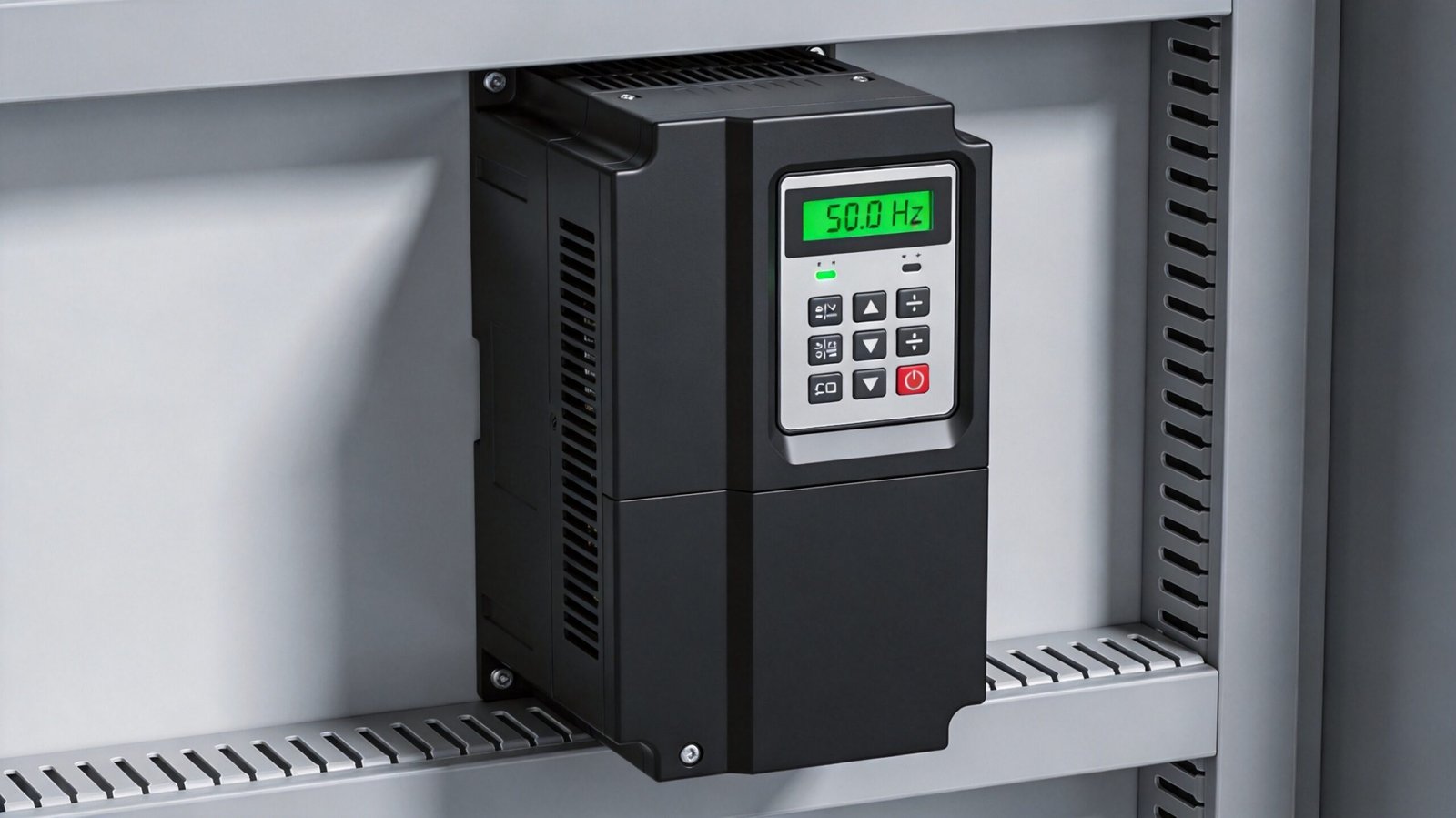
Step-by-Step VFD Calculation and Motor Matching Methodology
The most common and critical mistake in VFD sizing is relying solely on the motor’s horsepower or kW rating. While the nameplate provides a useful baseline, the actual current draw dictates the true required drive size. The fundamental rule of motor matching is that the VFD’s continuous output current must equal or exceed the motor’s Full Load Amps (FLA) under all operating conditions.
To achieve precise motor matching, engineers rely on three primary calculation methods. The most accurate is the Current-Based Sizing formula: IVFD ≥ IMotor × 1.1. Here, the drive’s rated output current must be at least 10% higher than the motor’s FLA to account for minor voltage fluctuations and harmonic distortions. The second method is Power-Based Sizing: PVFD ≥ PMotor × 1.1. This is only valid if the motor’s rated voltage perfectly matches the VFD’s output voltage. The third method involves calculating the Acceleration Torque, which is vital for high-inertia loads. You must calculate the required torque to bring the load from zero to base speed within the desired time frame and ensure the drive can supply the necessary peak current without stalling.
When contextualizing these calculations with Lakinele’s product lineup, the application environment dictates the ideal series. For heavy industrial applications requiring robust three-phase 380V power, the N/T Series offers exceptional high-overload capabilities. When performing a VFD calculation for high-inertia loads like centrifuges or extruders, the N/T Series is engineered to deliver 150% overload capacity for 60 seconds, ensuring smooth acceleration without tripping.
For light commercial, agricultural, or residential applications operating on single-phase 220V input, the S2 Series is the optimal choice. When sizing the S2 Series, a crucial VFD calculation factor must be considered: single-phase input current is roughly 1.73 times higher than the three-phase output current. Therefore, while the output kW rating might perfectly match the motor, the upstream input breaker and wiring must be sized to handle the significantly higher input current to prevent nuisance tripping.
Another critical factor in motor matching is the physical cable length between the drive and the motor. If the motor cable exceeds 50 meters, parasitic capacitance increases, which can cause high-frequency voltage spikes that damage the motor’s winding insulation. In such scenarios, you must either install output dU/dt filters, use sine wave filters, or upsize the drive by one frame size to handle the additional high-frequency leakage currents effectively.
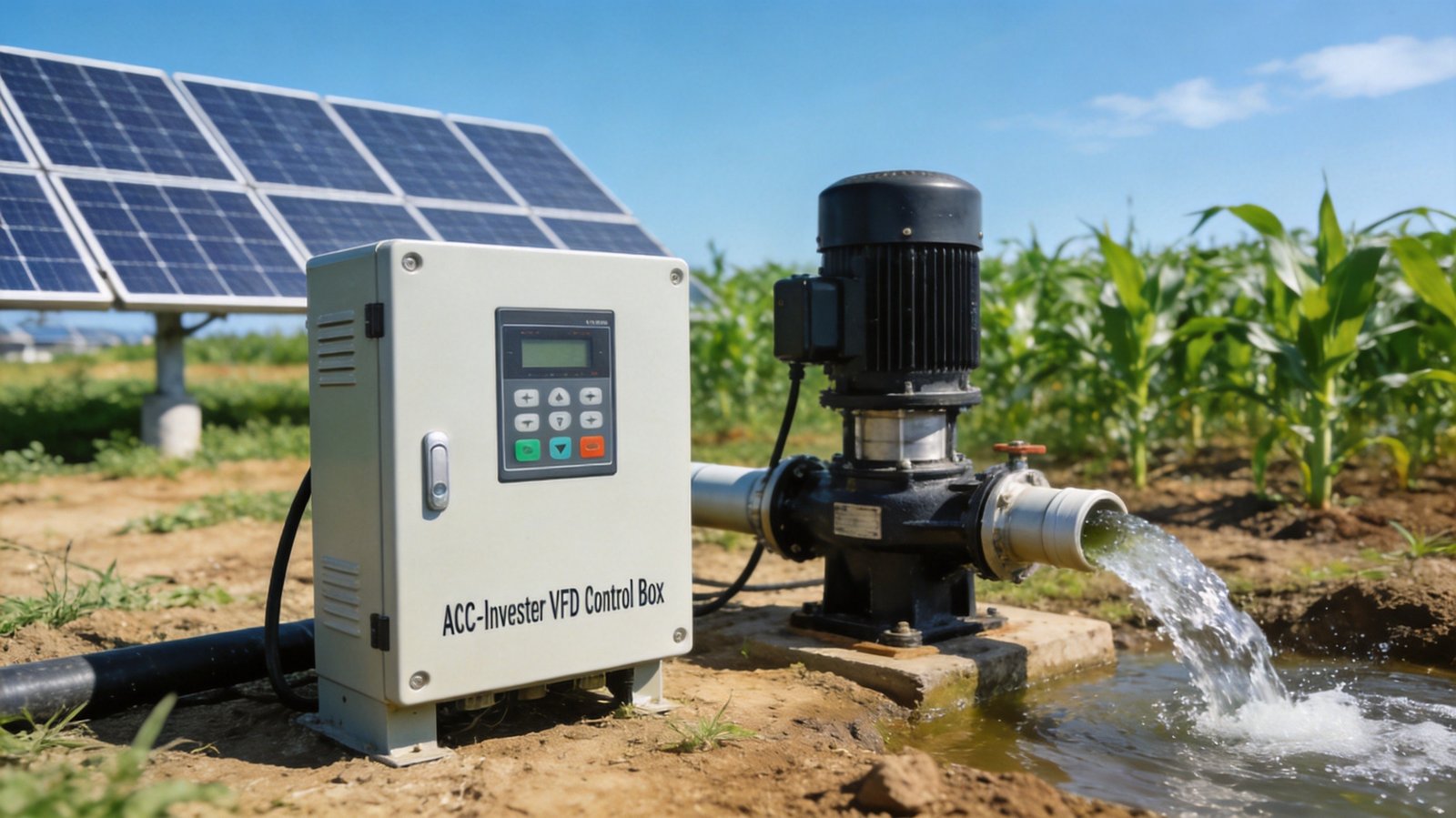
VFD Sizing Parameters: Single-Phase vs. Three-Phase Configurations
Understanding the electrical configuration is paramount for accurate drive selection. The table below outlines the critical sizing multipliers and voltage parameters for different drive topologies available in the Lakinele catalog.
| Drive Configuration | Input Voltage | Output Voltage | Current Sizing Multiplier | Recommended Lakinele Series |
|---|---|---|---|---|
| 3-Phase to 3-Phase | 380V – 480V | 0 – 480V | 1.0x to 1.1x Motor FLA | N/T Series |
| Single-Phase to 3-Phase (220V) | 220V – 240V | 0 – 220V | 1.1x to 1.2x Motor FLA | S2 Series |
| Single-Phase to 3-Phase (380V) | 220V – 240V | 0 – 380V | 1.5x to 1.73x Motor FLA | S3 Series |
| Single-Phase to Single-Phase | 220V – 240V | 0 – 220V | 1.0x Motor FLA | H2 Series |
Real-World B2B Application Scenarios
Selecting the correct drive extends beyond basic mathematical formulas; it requires a deep understanding of the mechanical application and the physical environment. Here is how proper VFD calculation applies to common industrial scenarios:
- Centrifugal Pumps and HVAC Fans (Variable Torque): These applications do not require high starting torque, as the load increases with the square of the speed. For a 15kW motor driving a large cooling fan, a standard 15kW drive is usually sufficient. However, if the installation environment has an ambient temperature exceeding 40°C, or is located at an altitude above 1,000 meters, you must derate the drive by 10-20%. In such cases, selecting the next kW rating up ensures reliable thermal performance and prevents overheating.
- Conveyors, Mixers, and Hoists (Constant Torque): These loads require full rated torque at zero speed and during the initial acceleration phase. When performing motor matching for a 5.5kW heavily laden conveyor, you must calculate the breakaway torque. If the load is highly inertial, you must specify a drive with 150% overload capacity for 60 seconds, such as our heavy-duty N/T models, rather than a standard light-duty unit designed for fans.
- Legacy Facility Retrofits with Single-Phase Power: Many older manufacturing facilities only have single-phase 220V power available but need to run modern 380V three-phase machinery. By using a phase-converting drive like the S3 Series, you can seamlessly run a 380V motor. The VFD sizing rule here is strict: the drive’s output current must be sized at 1.73 times the motor’s rated current because the single-phase input must supply all the energy required for the three-phase output.
Frequently Asked Questions
Can I size a VFD strictly by the motor’s kW rating?
No, sizing strictly by kW rating can lead to catastrophic failures if the motor’s voltage differs from the drive’s output voltage or if the motor operates with a low power factor. It is always more accurate and reliable to size the VFD based on the motor’s Full Load Amps (FLA) to ensure the drive can handle the actual current draw under maximum load conditions.
How do I size a VFD when converting single-phase 220V input to three-phase 380V output?
When using a single-phase to three-phase 380V drive, the input current is significantly higher than the output current due to the phase conversion process. You must size the VFD so that its output current rating is at least 1.73 times the motor’s rated current, and you must ensure the upstream single-phase breaker and wiring are sized to handle this high input current without nuisance tripping.
Do I need to upsize the VFD for long motor cable runs?
Yes, if the motor cable exceeds 50 meters, parasitic capacitance increases, leading to high-frequency leakage currents and dangerous voltage spikes at the motor terminals. You should either upsize the VFD by one frame size to handle the extra current, or install output dU/dt filters or sine wave filters to protect the motor insulation and ensure smooth operation.
What is the difference between variable torque and constant torque sizing?
Variable torque applications like fans and pumps require less starting torque, allowing you to use a standard or light-duty VFD sized exactly to the motor’s kW rating. Constant torque applications like conveyors and hoists require high breakaway torque, necessitating a heavy-duty VFD with 150% to 180% overload capacity for at least 60 seconds to prevent stalling during startup.
Can a single VFD control multiple motors simultaneously?
Yes, a single VFD can control multiple motors, but the VFD sizing calculation must be based on the sum of the Full Load Amps (FLA) of all connected motors, plus a 10% safety margin. Additionally, you must install individual thermal overload relays for each motor branch, as the VFD’s internal protection cannot monitor and protect individual motors in a multi-motor configuration.
Optimize Your Projects with Expert Motor Matching
Accurate VFD sizing and precise motor matching are the cornerstones of reliable, efficient industrial automation. Whether you are procuring components for a large-scale EPC project or stocking inventory for your regional distribution network, selecting the right drive ensures optimal performance, significant energy savings, and extended equipment lifespan. At Lakinele, we manufacture a comprehensive range of high-quality inverters designed to meet the rigorous demands of the global B2B market.
Explore our extensive catalog to find the perfect solution for your specific application requirements. Our lineup includes the robust N/T Series for heavy industry, the versatile S2 Series for light commercial use, the specialized S3 Series for phase conversion, and the compact H2 Series for single-phase applications. You can view our complete range of automation solutions by visiting our products page.
Don’t leave your project’s performance and profitability to chance. Let our expert engineering team help you finalize your VFD calculation and select the ideal drives for your portfolio. Reach out to us today for a Free Motor Matching Consultation and ensure your next project is a resounding success.