
When procurement teams ask me for a cost-effective Siemens VFD alternative that doesn’t sacrifice control precision, I point them straight to the SHZK 300N series. As a direct SINAMICS alternative, the 300N matches the core functionality of legacy Siemens drives while cutting lead times and overhead. I’ve spent years on our production and test floors, and I can tell you exactly where these drives overlap and how to map your parameters for a seamless swap.
Why Engineers Choose the SHZK 300N Over Legacy Drives
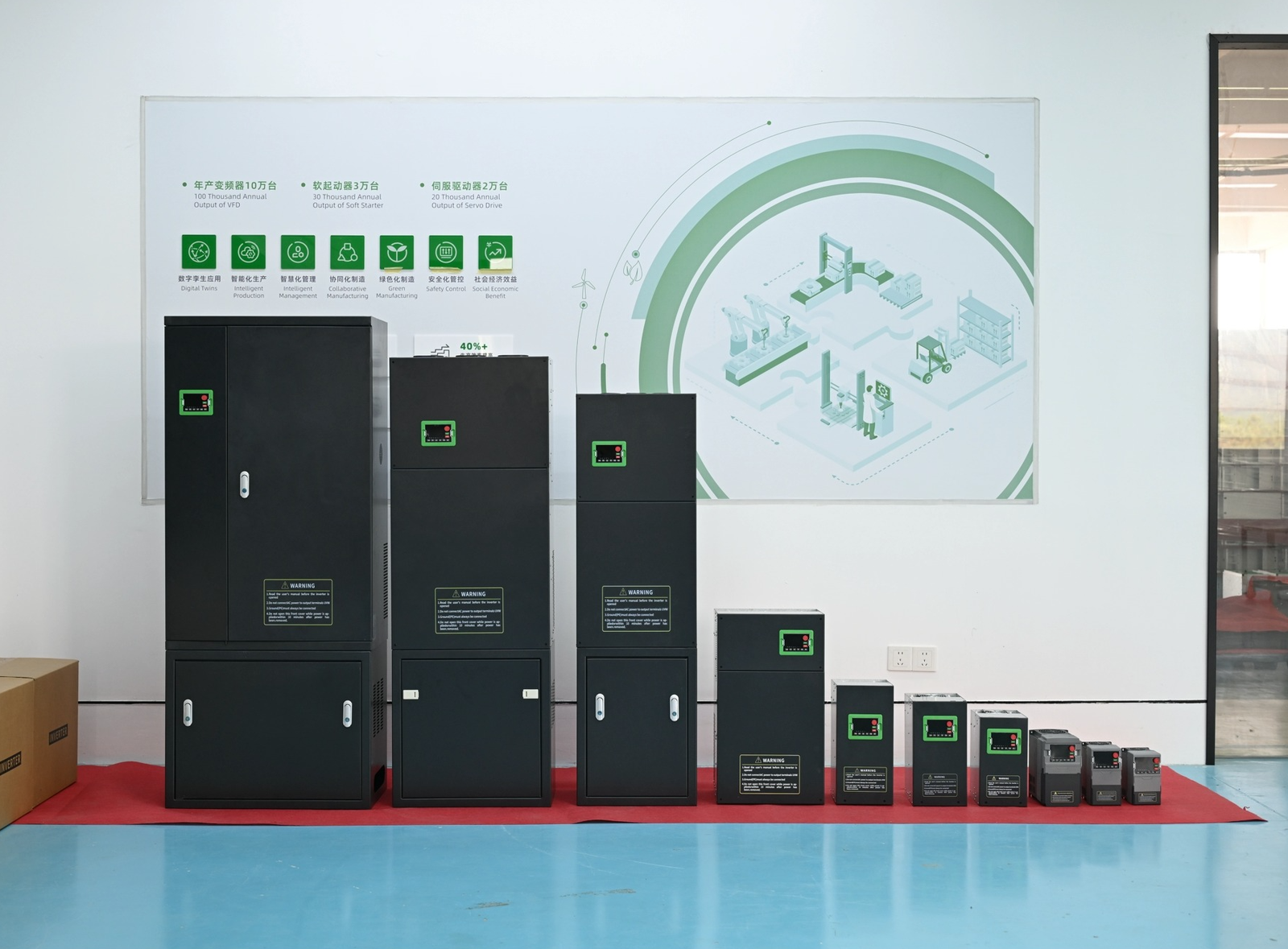
Replacing a failed drive on a Friday afternoon isn’t the time to discover a six-week lead time. The 300N series covers everything from 0.75kW up to 800kW. We build these in-house, which means we control the IGBT selection, the heatsink extrusion, and the final burn-in testing. If you are running a standard fan, pump, or general conveyor application, the 300N drops right into your panel.
Mapping PID Control: PA Group Parameters
One of the most common reasons I see engineers hesitate to switch brands is the fear of re-mapping complex PID loops. Let’s look at the variable frequency drive PID functionality in the 300N. The PA group handles this natively. If your old SINAMICS drive was using AI1 for the setpoint and AI2 for feedback, here is exactly how you configure the SHZK 300N:
| Code | Function | Range | Default |
|---|---|---|---|
| PA-00 | Given PID Source | 0~7 (0: PA-01, 1: AI1, 2: AI2) | 0 |
| PA-01 | Given PID value | 0.0 ~ 100.0% | 50.0% |
| PA-02 | PID Feedback Source | 0~8 (0: AI1, 1: AI2, 3: AI1-AI2) | 0 |
| PA-03 | PID application direction | 0: Positive, 1: Negative | 0 |
| PA-04 | PID setpoint feedback range | 0 ~ 65535 | 1000 |
| PA-05 | Proportional Gain KP1 | 0.0 ~ 100.0 | 20.0 |
| PA-06 | Integration Time Ti1 | 0.01 ~ 10.00s | 2.00s |
| PA-07 | Differential time Td1 | 0.000 ~ 10.000s | 0.000 |
Set PA-00 to 1 (AI1) for your setpoint, and PA-02 to 1 (AI2) for your feedback. If your process requires the output to decrease as the feedback increases (like cooling a heating element), flip PA-03 to 1 for Negative Effect. It’s that straightforward.

Hardware Built for the Panel
Look closely at the control board. We use isolated analog inputs to prevent ground loop noise—a common headache when integrating with PLCs. The power stage relies on robust IGBT modules, and the conformal coating on the PCB protects against the conductive dust you find in textile and woodworking plants. When you need a SINAMICS alternative, the physical build has to survive the environment, not just the spreadsheet.
Communication and Modbus RTU Integration
Legacy Siemens drives often rely on proprietary profibus cards that add cost and complexity. The SHZK 300N comes standard with RS485 for Modbus RTU communication. You can map the exact same register addresses for speed references and status words. Our engineering team provides the exact XML/EDS files if you need to integrate with a higher-level SCADA system.
300N Series Quick Specs at a Glance
Voltage Range
T4: 3PH 380-480V
T2: 3PH 200-240V
Power Range
0.75kW to 800kW
Output Freq
0 – 500Hz
Braking Unit
Built-in (GB suffix)
Production and Testing: Why the 300N Holds Up
I walk our test floor every morning. Before a 55kW unit (like the 300N-055GB-T4, rated for 106A input and 112A output) leaves the facility, it goes through a full load burn-in. We don’t just check if it powers on. We verify the overcurrent and overvoltage trip thresholds under actual thermal stress. This is why our failure rate in the field is a fraction of the industry average.

Related Technical Guides
- VFD Fault Codes and Troubleshooting
- How to Resolve VFD Overcurrent Faults
- Complete VFD Wiring Guide
- VFD Modbus RTU Communication Guide
- VFD Parameter Setup and Commissioning
- Brand VFD vs Factory Direct: What is the Real Difference?
Need help selecting the right VFD?
Contact our engineering team at mail@shzkvfd.com or WhatsApp +86 13757750205 for free application consultation.